

The right rug can anchor a room and tie your design vision together. The wrong size or placement? It can make even the most beautifully designed space feel awkward and disjointed. As designers, architects, and homeowners know—rug selection isn’t just about pattern and color. Dimensions and positioning are equally critical to achieving a balanced, intentional aesthetic.
At Giada Studio, we guide clients through these decisions daily. Here’s everything you need to know about sizing and placement to ensure your custom rug enhances—rather than undermines—your design.
Why Size Matters More Than You Think
A rug that’s too small can make furniture appear to float in space, creating visual disconnection. A rug that’s too large can overwhelm the room and make it feel cramped. The goal is to create visual cohesion—tying furniture groupings together while maintaining appropriate negative space around the perimeter.
The golden rule: Your rug should define and anchor the conversation area or functional zone, not merely sit beneath a coffee table.
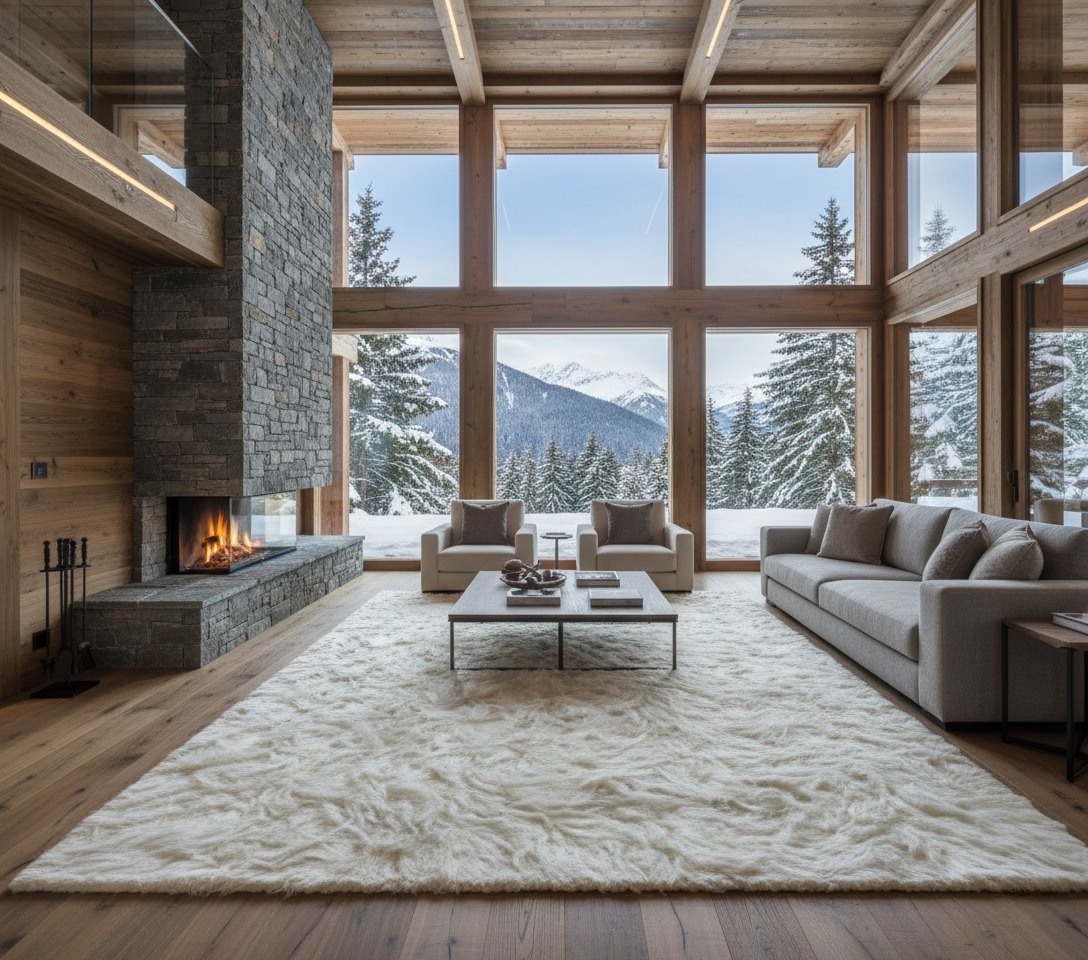
Living Room: The Anchor Zone
Your living room rug is likely the largest and most impactful textile in your home. Getting the sizing right here sets the tone for the entire space.
Option 1: All Furniture On (Most Recommended)
The most cohesive approach places all furniture—sofa, chairs, side tables, and coffee table—entirely on the rug. This creates a unified “room within a room” effect and is particularly effective in open-plan spaces where you need to define zones.
Sizing guidelines:
- Leave 12-24 inches of floor visible on all sides between the rug edge and walls
- For a standard 12′ x 15′ living room, consider a 9′ x 12′ or 10′ x 14′ rug
- In larger spaces (15′ x 18’+), you may need a 12′ x 15′ or even a custom oversized piece
Option 2: Front Legs On
If a full coverage rug exceeds your budget or feels too heavy for the space, placing just the front legs of seating on the rug while back legs remain on bare floor is a perfectly acceptable compromise.
What this requires: At minimum, the front two legs of your sofa and chairs should rest on the rug. The coffee table should be fully on the rug. This creates visual connection without requiring an oversized piece.
Common sizes: 8′ x 10′ or 9′ x 12′ work well for most standard living rooms using this approach.
What to Avoid
- Island rug syndrome: A small rug with only the coffee table on it and all seating off creates visual disconnection
- Diagonal placement: Unless intentionally designed as a diamond orientation, rugs should align with room architecture
- Blocking walkways: Ensure rugs don’t create tripping hazards in high-traffic paths
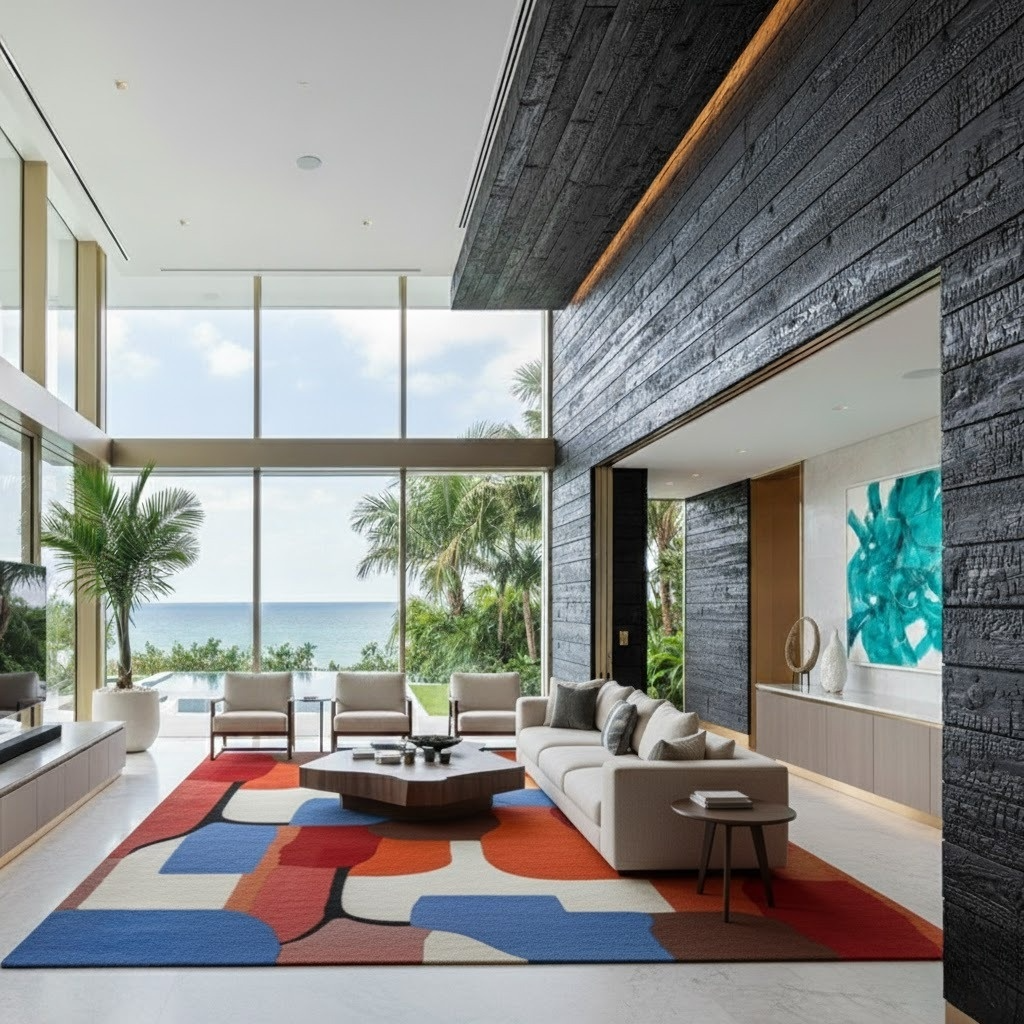
Dining Room: The Full Coverage Rule
Dining room rugs have a specific functional requirement: they must be large enough that chairs remain on the rug even when pulled out from the table.
The formula: Measure your dining table and add 24-30 inches on all sides where chairs will be positioned. This ensures chairs don’t catch on the rug edge when guests pull them out—a common source of dining rug frustration.
Standard sizing examples:
- 48″ round table → 8′ round rug minimum
- 60″ round table → 9′ round rug minimum
- 72″ rectangular table → 9′ x 12′ rug minimum
- 96″ rectangular table → 10′ x 14′ rug minimum
Pro tip: In dining rooms, go larger if you’re between sizes. It’s better to have excess rug than to have chairs teetering on the edge.
Material considerations: Dining areas benefit from durable, easy-to-clean materials like New Zealand wool or recycled PET. Reserve delicate silk for low-traffic spaces.
Bedroom: Grounding the Sleep Space
Bedroom rugs serve both aesthetic and functional purposes—they should be visually appealing while providing a soft surface for bare feet each morning.
Option 1: Under the Bed
The most common approach places the rug under the bottom two-thirds of the bed, extending 18-24 inches beyond the sides and foot of the bed.
Sizing for queen beds: 8′ x 10′ or 9′ x 12′
Sizing for king beds: 9′ x 12′ minimum
This creates a soft landing zone when you get out of bed while keeping the rug proportional to the room.
Option 2: Bedside Runners
For a more minimal or budget-conscious approach, place matching runner rugs (3′ x 8′ or 3′ x 10′) on either side of the bed. This provides softness underfoot without requiring a large centerpiece rug.
Option 3: Room-Sized Rug
In spacious primary bedrooms, a large rug that extends under all furniture—including nightstands and seating areas—creates ultimate luxury. Leave 12-18 inches of bare floor between the rug edge and walls.
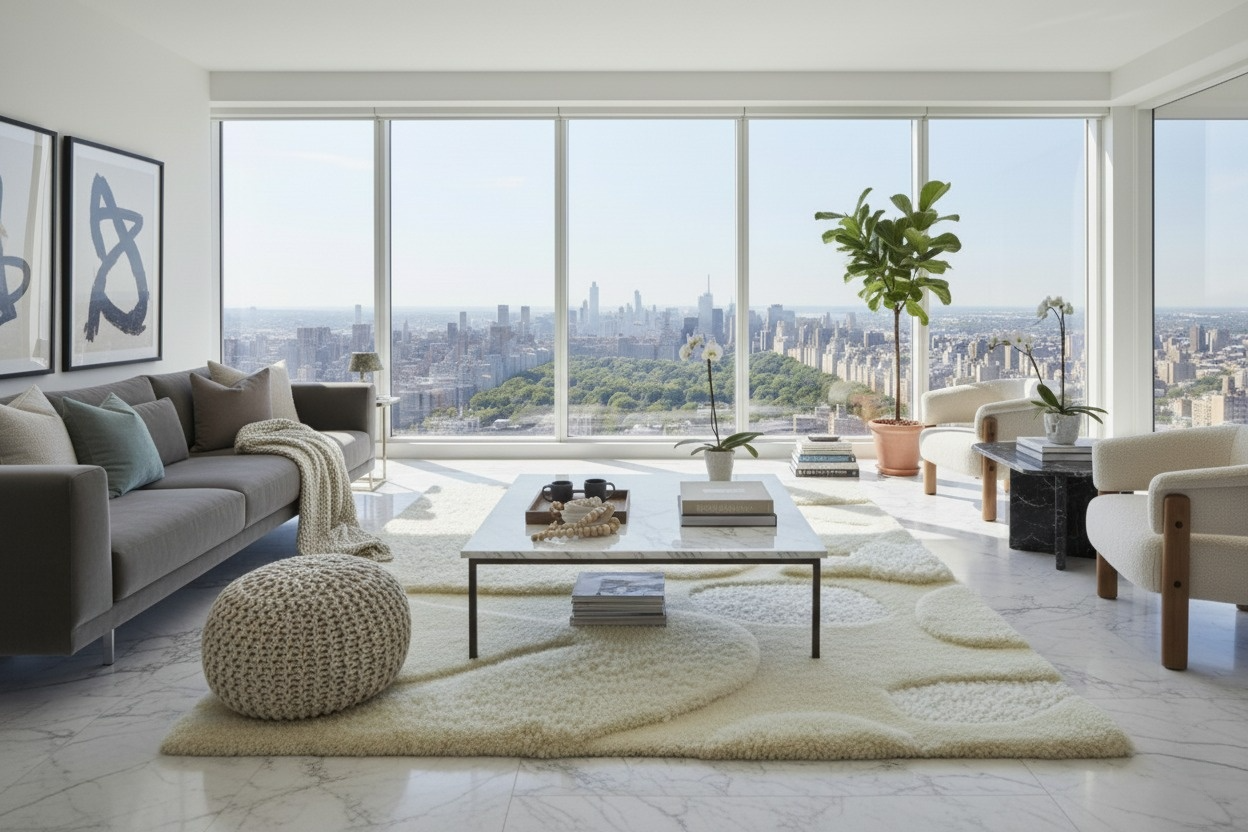
Entryways & Hallways: Runners & Statement Pieces
Entryways benefit from durable, easy-to-clean rugs that make a strong first impression without overwhelming the space.
Entryway sizing:
- Leave 4-6 inches of bare floor on all sides
- Ensure the rug doesn’t interfere with door swing
- Consider 4′ x 6′ or 5′ x 8′ for standard entry spaces
Hallway runners:
- Runners should span the length of the hallway, leaving 4-6 inches on each end
- Standard widths: 2.5′, 3′, or 4′ depending on hallway width
- Leave at least 12 inches of bare floor on each side of the runner
Layering: Advanced Styling
Layering rugs—placing a smaller rug atop a larger base rug—has become a popular design technique for adding texture, pattern, and visual interest.
Keys to successful layering:
- Use a neutral, low-pile base rug (jute, sisal, or flatweave)
- Layer a smaller, more decorative piece on top (2/3 the size of the base)
- Ensure both rugs have proper padding to prevent shifting
- Mix textures and patterns thoughtfully—don’t compete for attention
Custom Sizing: Your Secret Weapon
Standard rug sizes work for many spaces—but not all. Odd-shaped rooms, unconventional furniture arrangements, or specific design visions often require custom dimensions.
At Giada Studio, we specialize in fully custom sizing. Whether you need a 7.5′ x 11′ rug to fit a narrow living room or a 15′ x 20′ statement piece for a grand foyer, we can create it. Custom sizing ensures your rug fits your space perfectly—not approximately.
Custom advantages:
- Perfect proportions for your exact space
- No compromises on furniture placement
- Optimal use of your flooring investment
- Cohesive design without awkward gaps or overlaps
Final Placement Tips
- Measure twice: Before ordering, tape out the rug dimensions on your floor to visualize the size
- Consider traffic flow: Rugs should enhance, not obstruct, natural pathways through the room
- Account for doorways: Ensure rugs don’t prevent doors from opening fully
- Use rug pads: Always. They prevent slipping, protect floors, and extend rug life
- Think long-term: Choose sizes that accommodate potential furniture changes
Work With Experts
Selecting the right rug size and placement requires understanding proportion, scale, and function. At Giada Studio, we don’t just create beautiful rugs—we ensure they’re the right size and positioned perfectly for your space.
Whether you’re working from a standard size or need fully custom dimensions, our team brings over a century of expertise to help you make the right choice.
Ready to find your perfect rug? Contact our team to discuss sizing, materials, and custom design for your project.